Neal Gallagher
Email-ngallagh@nmsu.edu
Phone-505-287-6654
About the Program
Specializing in training Nursing Assistants, all students interested in the program need to understand that nursing assistants perform basic nursing functions involving patient care, C.P.R., working under the supervision of a registered nurse, licensed practical nurse, or physician. In general, nursing assistants attend to matters related to personal hygiene, safety, nutrition, exercise, and elimination. Maintaining patient comfort is a priority.
Upon successfully completing the C.N.A certificate, the student is eligible to take the Nursing Assistant Exam to become certified. The certified nursing assistant 16 credit program may be completed in one or more semesters. Dual/concurrent high school students are encouraged to enroll as well as the non-traditional working adults. Many of our C.N.A graduates continue on to completing the baccalaureate registered nurse program available on our campus. Other graduates have pursued many other allied health careers such as physical therapy, X/ray technician, ultrasound tech, pharmacy tech, dental assisting and hygienist, respiratory therapy, hemodialysis technician, phlebotomist, medication aids, emergency medical tech; and basic & intermediate operating room tech.
Career Opportunities
Nursing assistants enjoy solid job security and frequently work a flexible schedule. Typical work environments include long-term care facilities, hospitals, clinics and in the home.
According to the U.S. Bureau of Labor Statistics, overall employment of nursing assistants and orderlies is projected to grow 8 percent from 2019 to 2029, faster than the average for all occupations. As the baby-boom population ages, nursing assistants and orderlies will be needed to assist and care for elderly patients.
Medical Billing and Coding
After successful completion of the program the graduate will achieve the following outcomes:
As outlined by national certification standards—such as those set by the AAPC (CPC) or AHIMA (CCS-P).
The medical billing and coding job outlook for 2026 is highly positive, with employment projected to grow by 9% to 13% between 2024 and 2034. This growth rate, driven by an aging population and increased, tech-dependent healthcare utilization, is much faster than the average for all occupations, offering strong job security, competitive salaries, and remote work opportunities. Salaries for 2026 are strong, with certified, experienced professionals earning between $60,550 and over $90,000. Median pay is roughly $50,250 annually, with top earners in specialized roles surpassing $80,000.
Phlebotomy Technician
As of April 2026, the phlebotomist job outlook is strong, with an projected 8% employment growth from 2023–2033. National median pay is approximately $43,660–$44,860 annually ($20.99/hr). Top-paying sectors include outpatient care centers ($51,180+) and diagnostic labs.
Phlebotomist Salary Trends 2026
Shift Differentials: Evening/weekend shifts often add $2–$5 more per hour
Job Outlook & Growth (2026–2033)
Research.com +1
Regional Spotlight: New Mexico (April 2026)
Gainful Employment Disclosure
The Phlebotomy Program’s mission is to educate and train entry-level competent and diverse phlebotomists with the knowledge, critical thinking and life/work skills required for participation in the classroom and clinical settings, leading to gainful employmentCertified Nursing Assistant
The 2026 job outlook for Certified Nursing Assistants (CNAs) remains strong, driven by high demand in aging populations. As of early 2026, CNA salaries average roughly $35,000–$48,000 annually ($17–$25+ per hour), depending on region, experience, and setting.
2026 Salary Breakdown
2026 Job Outlook
Gainful Employment Disclosure
The Phlebotomy Program’s mission is to educate and train entry-level competent and diverse phlebotomists with the knowledge, critical thinking and life/work skills required for participation in the classroom and clinical settings, leading to gainful employmentMeet the Faculty
Neal Gallagher, BSN, RN, MA-Certificate
Program Manager, Allied Health Sciences
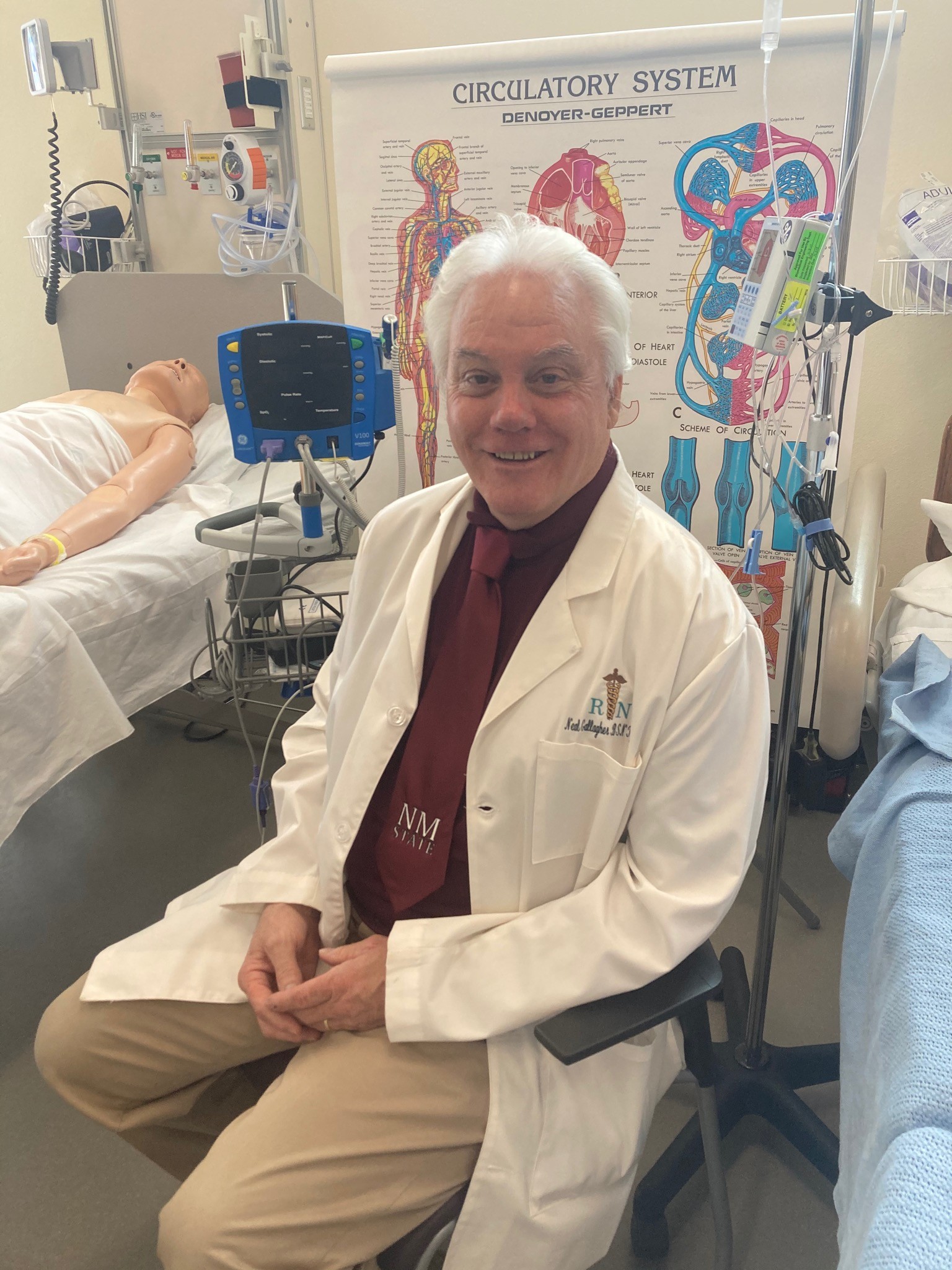
Welcome to the Allied Health Sciences program! My career in healthcare began over 50 years ago, starting in 1974 when I first trained as a nursing assistant. While exploring various paths within the field, I discovered my true calling in nursing. I earned my Bachelor of Science in Nursing (BSN) from Western Connecticut State University in 1983, working full-time as a nurse’s aide throughout my university years, finding it to be an invaluable prerequisite to becoming a Registered Nurse.
My clinical background is extensive and diverse, including clinical affiliation at Danbury Hospital in Danbury, Connecticut, and Yale University Teaching Hospital in New Haven, Connecticut—one of the nation's most prestigious Ivy League facilities. Over the decades, I have gained specialized training and experience across many specialties of patient care, including:
Intensive Care Units (ICU) neurological, coronary, medical and surgical critical care units. emergency room, and Post-Anesthesia Recovery, Surgery, Oncology, Hemodialysis and peritoneal Dialysis, brain and spinal injury, Spinal Care. Obstetrics, Pediatrics, Home Health Care, and Geriatrics. Adult and adolescent psychiatry, as well as alcohol and drug detoxification and rehabilitation. Correctional health and case management for the Miners Radiation Exposure Compensation Act.
Since 1998, I have had the privilege of serving as your Program Manager for Allied Health Sciences. In the classroom, I lead courses in Anatomy and Physiology, Basic Nursing Fundamentals, Medical Terminology, Clinicals, and Phlebotomy.
Of all the roles I have held in my 52-year career, teaching here at New Mexico State University has been the most rewarding. My goal is to facilitate your success, whether that means helping you launch a lifelong career in healthcare or helping you discover your true professional path early in your academic journey.
"I believe that every student has the potential to excel. "My program operates on the principle that “FAILURE IS NOT AN OPTION” Given the guidance and encouragement to achieve success. we are committed to providing the support necessary to ensure everyone master’s the material."
I look forward to learning with you!